


Does REC Make Panasonic Solar Panels? What Arizona Buyers Should Know About the HIT Technology License

Did REC Group actually buy Panasonic's solar manufacturing?
Yes. In 2021, Panasonic sold its solar cell and module manufacturing operations to REC Group, a Norwegian solar company majority-owned by China National Bluestar. Panasonic exited the physical production of solar cells entirely. REC acquired the manufacturing assets, including the facilities in Malaysia that produced the HIT (Heterojunction with Intrinsic Thin-layer) cells that made Panasonic panels famous. So when a contractor quotes you a "Panasonic panel," the cell technology behind it no longer comes from a Panasonic factory.
For a Phoenix homeowner trying to figure out which brand to trust on a 25-year warranty, that detail matters. The brand name stayed. The manufacturing did not.
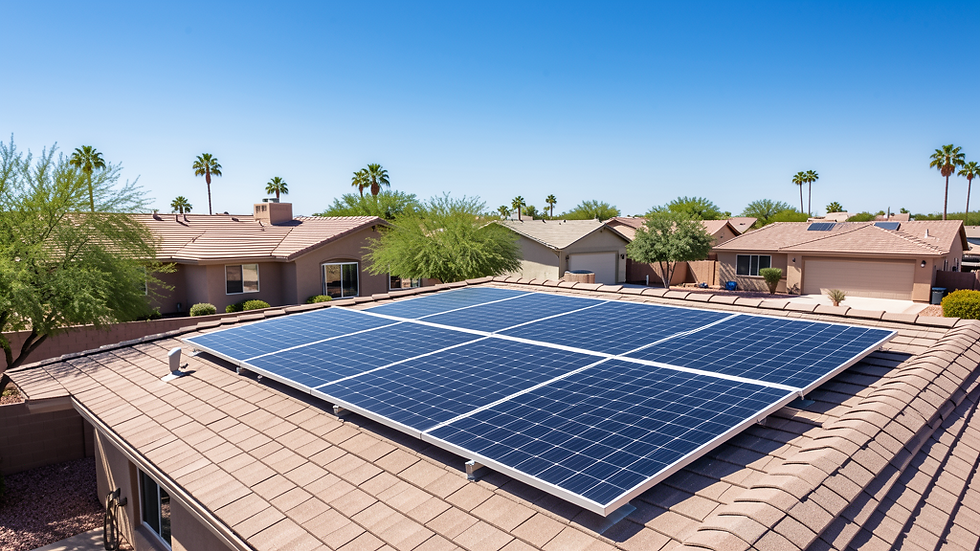
What is the HIT technology that REC now licenses?
HIT stands for Heterojunction with Intrinsic Thin-layer, a cell architecture Panasonic developed in the 1990s that layers a thin amorphous silicon film between the crystalline silicon cell and the contacts. That design gives the cell better performance at high temperatures and a lower temperature coefficient than standard monocrystalline PERC panels.
The temperature coefficient is the number you actually care about in Phoenix. It measures how much output a panel loses for every degree Celsius above 25C. Panasonic's original HIT cells carried a temperature coefficient around -0.26% per degree Celsius. On a 115F Phoenix roof, that advantage is real. A standard PERC panel runs around -0.34% to -0.45% per degree. Over an Arizona summer, that gap translates to measurable extra production.
REC built its Alpha series around a similar heterojunction architecture, sometimes labeled HJT (Heterojunction Technology), which is the industry-standard term for what Panasonic called HIT. The physics are essentially the same. REC's Alpha panels carry a temperature coefficient of approximately -0.24% per degree Celsius, which is competitive with what Panasonic originally offered.
Does the Panasonic EverVolt use REC's HJT cells?
No, and this is where the story gets a bit confusing. Panasonic still sells panels under the EverVolt brand, but those panels are not manufactured by Panasonic. After selling its manufacturing business, Panasonic licensed the EverVolt name to a third-party manufacturer to continue selling panels in North America. The cells in a current EverVolt panel are produced by a separate company, not by Panasonic and not by REC.
REC, on the other hand, built its own new manufacturing capacity using the HJT technology it acquired. REC's Alpha panels are the direct heirs to the original HIT technology line in terms of cell architecture, even though they carry a different brand name.
So the short answer: REC uses the technology Panasonic invented. Panasonic sells panels under a licensed brand but doesn't make the cells anymore. They're two distinct product lines from two distinct manufacturing operations, and neither product is identical to what Panasonic sold before 2021.
How do REC Alpha and Panasonic EverVolt compare on performance in Arizona heat?
Both use heterojunction-type cells and perform well in high-temperature conditions, which is the main reason either brand shows up in Arizona comparisons at all. Phoenix averages about 5.8 peak sun hours per day, and summer temperatures routinely push 108F to 115F. On a south-facing roof at that temperature, temperature coefficient differences add up over thousands of hours of annual production.
The REC Alpha Pure-R series has shown panel efficiency up to 22.3%, with a temperature coefficient of about -0.24% per degree Celsius. The Panasonic EverVolt H series uses a similar HJT architecture and competes closely on those specs, with efficiency ratings around 22.2% and a comparable temperature coefficient.
In practical terms, a 10kW system on a Phoenix home under either brand should produce roughly 18,000 to 20,000 kWh per year given the local sun resource. That production level can offset most or all of a typical APS or SRP bill. According to APS, the average residential customer uses about 1,200 kWh per month in summer. A properly sized HJT system covers that with production to spare most months.
Where the two brands diverge is in warranty backing. That's the part that matters most when you're committing to a 25-year contract.

Which brand has stronger warranty backing in Arizona?
This is the most important question for any Arizona buyer, and the answer is not obvious.
REC Group offers a 25-year product and performance warranty. Performance warranty covers 92% of rated power after 25 years, which is among the stronger degradation guarantees in the market. REC is backed by China National Bluestar and has manufacturing scale that provides some financial stability, though it is not a publicly traded company with the same disclosure requirements as, say, a U.S.-listed manufacturer.
Panasonic's EverVolt warranty is also 25 years on product and performance. The warranty is issued by Panasonic Corporation of North America, which carries the weight of the Panasonic brand. However, since the panels are manufactured under license by a third party, a warranty claim does not go to the factory that built the cell. It goes to Panasonic's North American business, which then works through its supply chain. The contractual backing is the Panasonic name, which is substantial, but the manufacturing accountability chain is less direct than it was pre-2021.
For a Scottsdale or Chandler homeowner comparing quotes, the practical takeaway is this: ask your contractor specifically which entity will back the warranty claim if a panel fails in year 18. Get that answer in writing. A solar broker can verify this during the quote comparison process rather than leaving you to navigate it alone. Phoenix Valley Solar works as an independent broker, sourcing competing installer bids so you get clear answers on warranty accountability before you sign.
How to choose a solar installer in Phoenix when brands overlap like this
The REC-Panasonic situation is a good example of why shopping on brand name alone isn't enough. Two brands with almost identical cell technology can have very different warranty backing, installer relationships, and supply chain stability.
A few things that matter more than brand name when choosing a solar installer in Phoenix:
The installer's experience with that specific brand matters. An installer who has handled dozens of REC or Panasonic jobs knows the mounting hardware, the warranty process, and the common failure modes. An installer who adds a brand to their catalog to win a quote comparison does not.
The installation company's own warranty is separate from the panel warranty. Workmanship issues, roof penetration problems, and wiring faults fall under the installer's warranty, not the manufacturer's. Arizona's heat cycles are hard on roof penetrations. A 10-year workmanship warranty from a local installer who will still be in business in 2034 is worth more than a 25-year panel warranty from a company you can't reach.
Comparing solar installers in Phoenix without a sales pitch is actually possible. Phoenix Valley Solar gives Phoenix area homeowners competing quotes from vetted installers and explains the differences in plain language. That's the fastest way to cut through the brand marketing and see what the numbers actually look like for your roof and your utility bill.
Does this affect solar savings on an APS or SRP bill in Phoenix?
No, not significantly. The manufacturing story doesn't change the physics of how solar panels reduce your electric bill in Arizona. Both REC Alpha and Panasonic EverVolt panels generate roughly the same amount of power per square foot, degrade at similar rates, and perform well enough in Arizona heat to support strong economics.
With 5.8 peak sun hours per day in Phoenix, a 10kW system typically produces about 18,000 to 20,000 kWh annually. APS residential rates have been running around 11 to 13 cents per kWh on standard plans, with peak time-of-use rates reaching 20 cents or higher in summer afternoons. At those rates, the annual savings from a properly sized solar system can run $1,800 to $2,400 per year depending on your plan and usage pattern.
What affects savings most is not which brand's HJT cell is on your roof. It's system sizing, your utility rate plan, and whether your installer sets up net billing correctly so you get credit for what you export. The Arizona Solar Calculator can give you a rough savings estimate based on your current bill and roof orientation before you talk to any installer.
For Mesa and Chandler homeowners on SRP, rates and export compensation work differently than APS. SRP's residential price plan and demand charge options can significantly change the math on solar payback. Neither APS nor SRP territory maps neatly to city lines. Your specific neighborhood determines your utility, which means your specific plan options vary by address. Check a recent bill to confirm which utility serves your home before running savings estimates.
What about the prepaid solar lease option for Arizona homeowners?
If you're interested in either REC Alpha or Panasonic EverVolt panels but want to reduce upfront cost, the prepaid solar lease is worth understanding. With a prepaid lease, a solar finance company owns the system and claims the available tax incentives, then passes those savings to you as a lower upfront price.
The federal residential solar tax credit under Section 25D expired for owner-buyers after December 31, 2025. A homeowner who buys a solar system outright in 2026 or later receives no federal credit. However, with a prepaid lease, the leasing company can still claim the 48E commercial credit through 2027 and pass that value through to the customer. That structure delivers the same 30% cost reduction even though you don't own the system.
The prepaid lease means you pay a single discounted amount at signing and own the right to use the power the system generates for the lease term. There's no monthly payment after that. This is not tax advice, and whether the 48E pass-through benefit applies to your specific situation depends on the structure your installer uses. Talk to a tax professional before making decisions based on the credit.
If you want to understand which financing option works best for your situation, Phoenix Valley Solar walks through the options without pushing you toward any particular one.
City-specific solar context for the Phoenix Valley
In Scottsdale, HOA communities are common, but Arizona's A.R.S. 33-1816 protects your right to install solar regardless of HOA rules. HOAs can set reasonable guidelines but cannot prohibit rooftop solar outright. REC Alpha panels in all-black versions are popular in Scottsdale neighborhoods where aesthetics matter to the association.
In Mesa, both APS and SRP serve different neighborhoods. The utility determines your export rate, which affects payback period. For SRP-served Mesa homes, the export value under SRP's current pricing is lower than it was under net metering, so system sizing strategy is important.
In Tempe and Gilbert, smaller lot sizes and older roofs mean a site assessment matters more than brand selection. Both REC and Panasonic EverVolt panels come in higher-efficiency formats that generate more power per square foot, which helps on constrained roof areas.
In Peoria and Surprise, newer construction means larger roof areas and often higher overall consumption from larger homes. The efficiency difference between a standard PERC panel and an HJT panel is meaningful here because you may be able to cover more of your load with fewer panels.
Across all Phoenix Valley cities, the core economics of solar are similar: high sun resource, rising utility rates, and a reasonable payback period. The brand decision is secondary to getting a qualified local installer and a system sized correctly for your consumption. Read more about what Phoenix's 5.8 peak sun hours mean for system sizing.
Frequently Asked Questions
Does REC make Panasonic solar panels?
No. REC Group acquired Panasonic's HIT solar manufacturing operations in 2021, but REC sells its own Alpha brand panels. Panasonic's EverVolt panels are made by a separate third-party manufacturer under license from Panasonic. The two brands are distinct products from different factories.
What happened to Panasonic's HIT solar technology?
Panasonic sold its solar cell manufacturing business to REC Group in 2021. REC now produces heterojunction (HJT) panels using the same cell architecture under the REC Alpha brand. Panasonic's own EverVolt line continues under a licensing arrangement with a different manufacturer.
Are REC Alpha panels good for Arizona heat?
Yes. REC Alpha panels use HJT cell technology with a temperature coefficient around -0.24% per degree Celsius, which loses less power in high heat than standard PERC panels. In Phoenix where summer rooftop temperatures reach 115F, that difference adds measurable annual production to a solar system.
Which solar panel brand has a better warranty, REC or Panasonic?
Both REC and Panasonic EverVolt offer 25-year product and performance warranties. Panasonic's warranty is backed by Panasonic Corporation of North America. REC's is backed by REC Group. Since EverVolt panels are now third-party manufactured, ask your installer specifically which entity handles warranty claims on a panel failure.
How much can solar lower an APS bill in Phoenix?
A properly sized solar system in Phoenix can reduce an APS bill by 70 to 100 percent for most months. With APS residential rates running 11 to 13 cents per kWh on standard plans and Phoenix averaging 5.8 peak sun hours per day, annual savings on a 10kW system typically run $1,800 to $2,400.
Can I still get the 30% solar discount in Arizona in 2026?
Owner-buyers in 2026 no longer qualify for the federal Section 25D residential tax credit, which expired after 2025. However, a prepaid solar lease lets the leasing company claim the 48E commercial credit and pass the same 30% discount to you as a reduced upfront price. This is not tax advice; consult a tax professional.


Comments